Portland, OregonA working archive of the citySaturday, October 3, 2026
Neil Madison emblem: a bridge over water inside a ring

Neil Madison

Historian  ·  Portland, Oregon

Lead story

Portland, before it forgot itself

A city that rebuilds every thirty years has to be read backwards — through its bridges, its plats, and the paper it threw away.

By Neil Madison  ·  Portland, Oregon
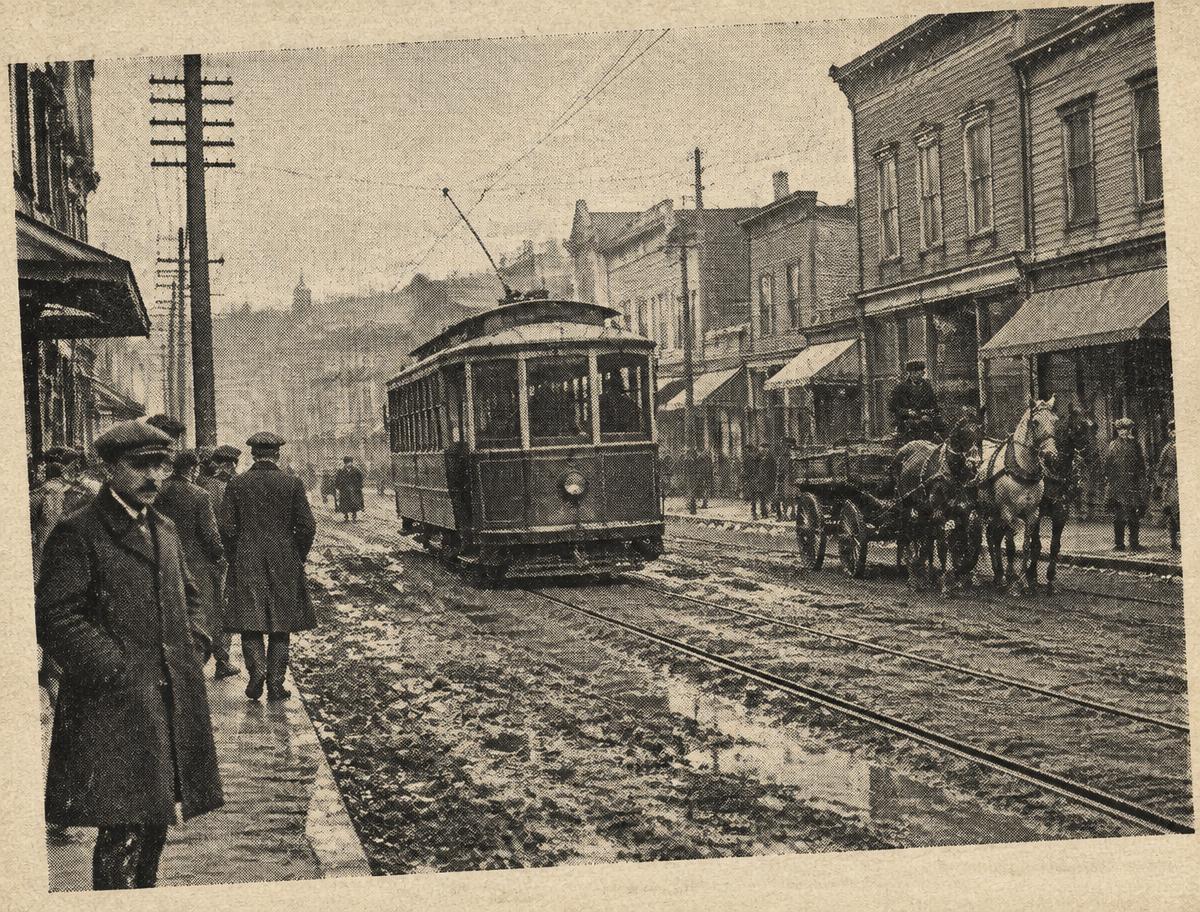
An early streetcar on a muddy Portland street, horses and pedestrians in the foreground
AboveThe streetcar age turned a river town into a city of neighborhoods. The lines came first; the houses followed the timetable.

Portland has torn itself down and rebuilt so often that the city keeps mistaking its own memory for rumor. The river was dug and straightened. The rail yards moved. A neighborhood called the Village was cleared, and the people who lived there are now a footnote in a transit study. Every few decades somebody invents a new Portland and quietly retires the last one.

I work the other direction. I start with the paperwork — a plat map, a streetcar timetable, a photograph of a building nobody can name — and I follow it until it says something the brochure doesn't. Portland was founded in 1845 and named for Portland, Maine on the strength of a coin toss, which tells you something honest about how the place was made: not planned, wagered.

The bridges are the clearest place to read it. The first one, the Morrison, opened in 1887 and instantly split the city's loyalties. Four years later the Madison Street Bridge swung open on the alignment the Hawthorne Bridge still uses. Each span was an argument about where the city thought its center was, and each argument was settled by whoever owned the tollhouse.

None of this is nostalgia. A neighborhood that is documented is much harder to erase, and a bridge with a history is much harder to pretend was always somewhere else. That is the whole of the work: keep the record open, keep the names straight, and let the city be held to what it actually did.
“A city that stops naming its own past starts selling it.”

— Neil Madison, Portland, Oregon
01

The Beat

Four stubborn corners of the city's record, worked continuously.

01

Bridges & Waterfront

Nine spans across the Willamette, three ferries before them, and a river that moved the city's center of gravity every time anyone figured out how to cross it.

02

Streetcar Suburbs

The interurban lines that sold Portland its first outlying neighborhoods — Sellwood, Albina, Montavilla — platted to a timetable instead of a grid.

03

Lost Neighborhoods

The Village, Dam Square, Vanport. Places the city erased on purpose, then paved, then forgot to mention in the brochure.

04

Records & Ephemera

Plat maps, streetcar menus, funeral programs, city directories. The paper trail of an ordinary life, which is the only kind that survives.

02

A working chronology

The nineteenth century as it was recorded, not as it is remembered.

  1. 1845

    Portland is platted on the west bank of the Willamette and named, after a coin toss, for Portland, Maine.

  2. 1850

    The Oregonian is founded — the record-keeper the city never stopped arguing with.

  3. 1851

    Portland incorporates. Hugh O'Bryant becomes mayor; Portland Public Schools is founded.

  4. 1855

    Lone Fir Cemetery is established, and with it the city's habit of burying its dead in floodplain.

  5. 1857

    Aaron Meier opens a mercantile store that becomes Meier & Frank and, eventually, a downtown skyline.

  6. 1869

    Portland High School opens on the hill; it is renamed Lincoln in 1908.

  7. 1871

    City Park is set aside on the west hills — today's Washington Park.

  8. 1872

    The Portland Street Railway puts horsecars on rails, and the first streetcar suburbs begin.

  9. 1883

    The Northern Pacific Railway arrives. Portland stops being a river town and starts being a terminus.

  10. 1887

    The first Morrison Bridge opens — the first bridge across the Willamette in Portland.

  11. 1891

    The first Madison Street Bridge opens, and Albina and East Portland are annexed into the city.

  12. 1892

    The Portland Art Museum is established, five years after the city's own name was still in dispute.

03

The bridge called Madison

The name has been on the map since 1891 — longer than any of us.

Portland's first Madison Street Bridge opened on January 11, 1891: a wooden Pratt truss with a swing span, built by the Pacific Bridge Company and owned by a company that charged you to cross the river. Its east end sat in the city of East Portland, which was not yet part of Portland at all — an annexation argument solved with timber and a pivot.

It was rebuilt in 1900 on the same piers, carried streetcars and horse-drawn vehicles until 1909, and was replaced by a steel vertical lift that still stands, quietly renamed the Hawthorne Bridge. The alignment never moved. Only the name did — which is Portland's usual trick.

I keep the bridge files because a span is the most legible document a city produces. You can read who it served, who paid for it, and who was on the other side of the river by the time the tollhouse came down.

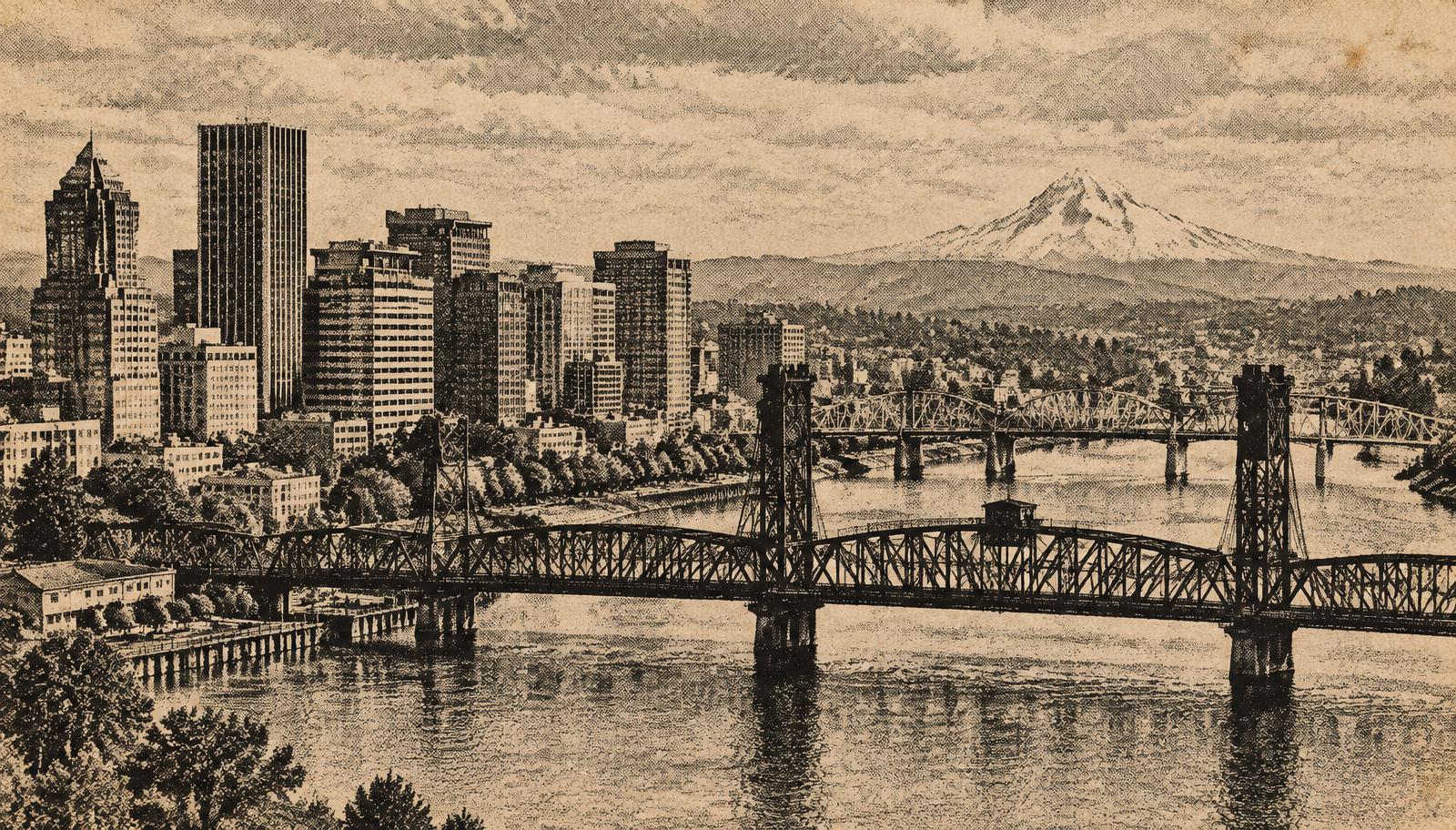
Halftone print of Portland's riverfront: truss bridges, downtown towers, and a snow-capped mountain beyond
The Willamette from the west bank: truss spans, the towers behind them, and the mountain the city was never able to build past.

Bridge file

Opened
January 11, 1891, as a toll bridge
Design
Wooden Pratt truss with a 317-foot swing span
East end
In the then-separate city of East Portland
Rebuilt
1900, on the same piers
Succeeded by
The Hawthorne Bridge, a vertical lift
04

In the archive

What is actually in the boxes, and what is missing from them.

Photographs

  • Street scenes, 1890s–1950s, mostly unidentified
  • Bridge construction plates and survey negatives
  • Family albums bought by the box, not the print

Maps & Plats

  • Subdivision plats with the street names that lost
  • Sanborn fire insurance atlases, sheet by sheet
  • Annexation boundaries, 1891 to the present

Printed Matter

  • City directories, the only census that reads like a neighborhood
  • Streetcar timetables and transfer slips
  • Trade catalogues, funeral programs, church bulletins

Holdings are catalogued as they arrive. If you are chasing a name, an address, or a bridge, write before you fly out — half the useful material is not online anywhere.

05

Corrections & correspondence

Research questions, corrections to the record, invitations to talk, and photographs that need a name.

No list, no newsletter. It goes to one person.